Age
Backed-Out Screws
- You See
- Screw heads standing above the rib with cracked rubber washers.
- What It Means
- Each loose screw is an open hole; oversized sealed fasteners close it.
As an Elkhart commercial metal roof repair contractor, we replace rusted panels, reseal laps, and rebuild flashing on steel roofs over shops, storage, and plants.
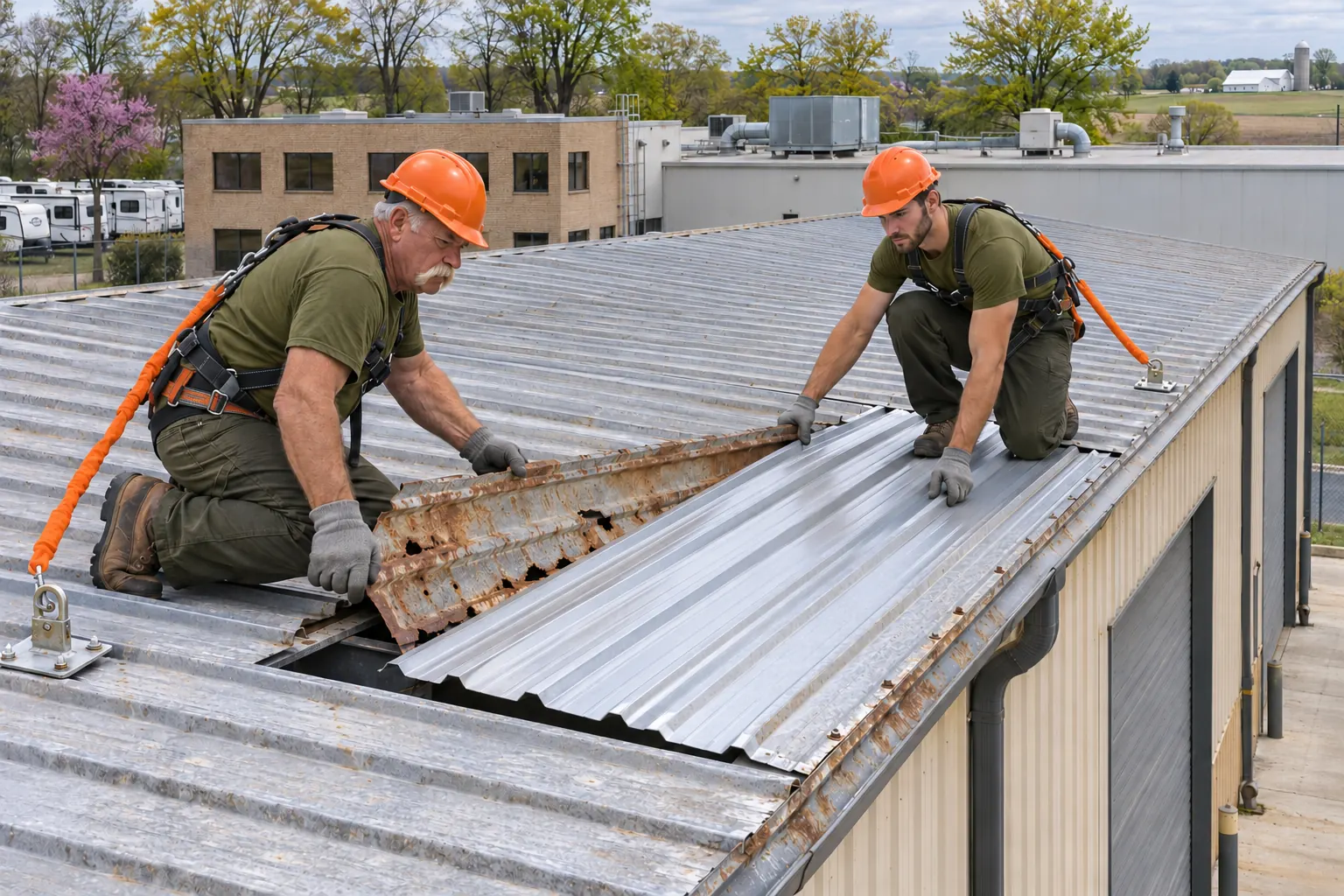
Elkhart commercial metal roof repair fits most steel roofs whose panels still have metal left. This shows where each path makes sense.
Steel roofs leak at their joints long before the panels wear out. These are the joints that fail first here.
Repairing the joints keeps good steel in service and stops water at the points where metal roofs actually leak.
Most panels on a leaking metal roof still have years of metal left. Fixing fasteners, laps, and trim keeps those sheets working instead of buying new ones.
Resealing an end lap with fresh butyl tape keeps meltwater out of the joint, where trapped moisture turns surface rust into holes.
Replacement panels are matched to the existing rib profile and gauge so they lap tight with the sheets beside them.
New closures and sealed fasteners at ridge caps, rakes, and eaves keep blowing rain from getting under the edge of the roof.
Call with the building type and where the water shows inside. Lap and fastener leaks are often fixed in one visit.
Call Us(574) 384-0858Each decision comes before the next one, starting with a walk of the roof.
We walk every panel run and check fasteners, laps, ridge caps, gutters, and penetrations. Inside, we look for daylight, drips, and stains under the deck.
Leaks get sorted into fastener, lap, trim, and penetration repairs. A few rusted-through panels get marked for replacement one sheet at a time.
If the panels still have metal left, repair wins. If rust has thinned sheets across most of the roof, a retrofit or new panels may be the better use of money.
Panel swaps happen one sheet at a time so the opening is never left overnight. Work is planned around equipment and people below.
Fasteners are checked for seal and torque, laps for full tape contact, and swapped panels for tight laps. You get photos of each repair location.
Many Elkhart buildings mix metal roofs with flat sections, plant equipment, or leaks that show up far from the opening.
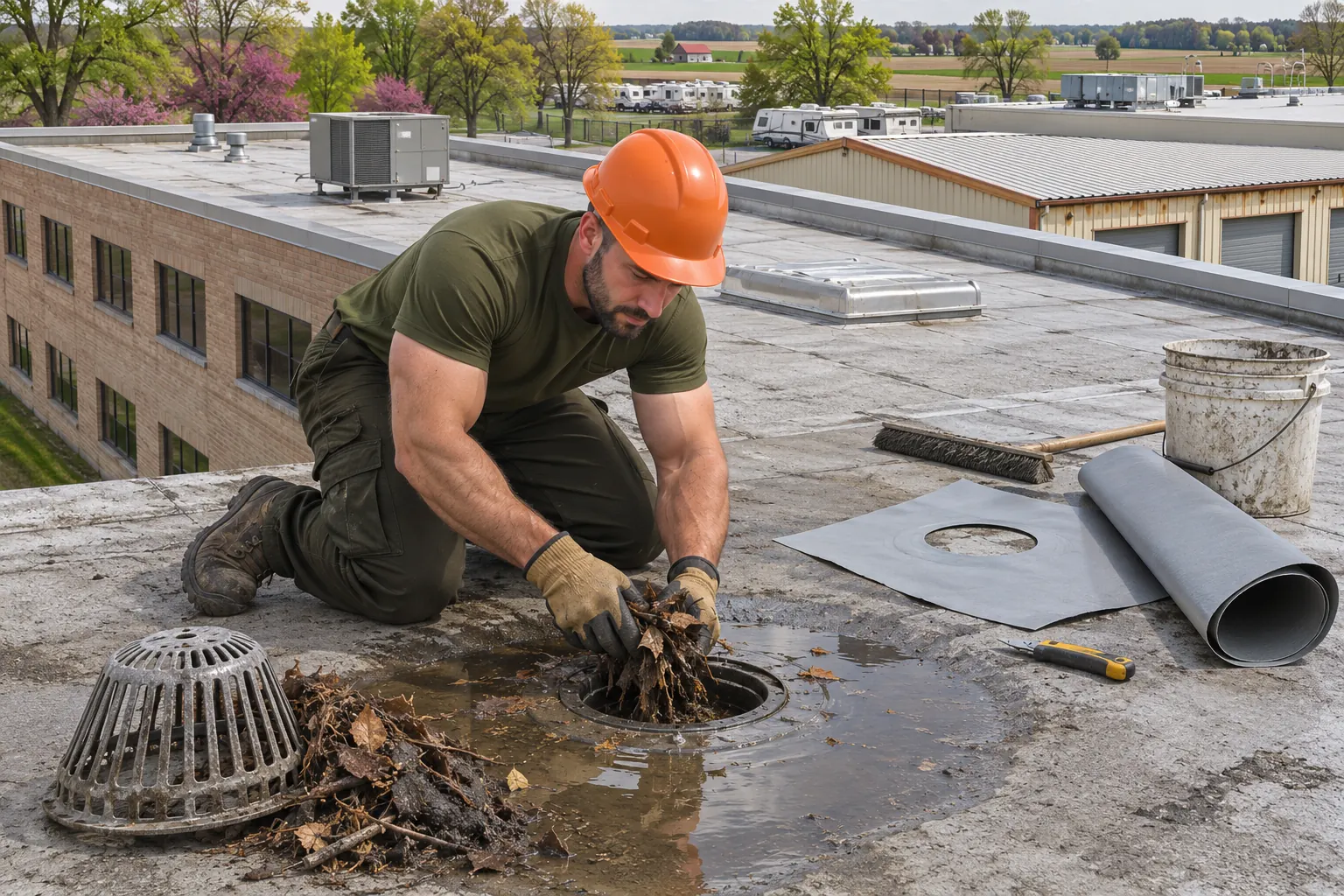
Seams, drains, and blisters on low-slope membrane roofs.
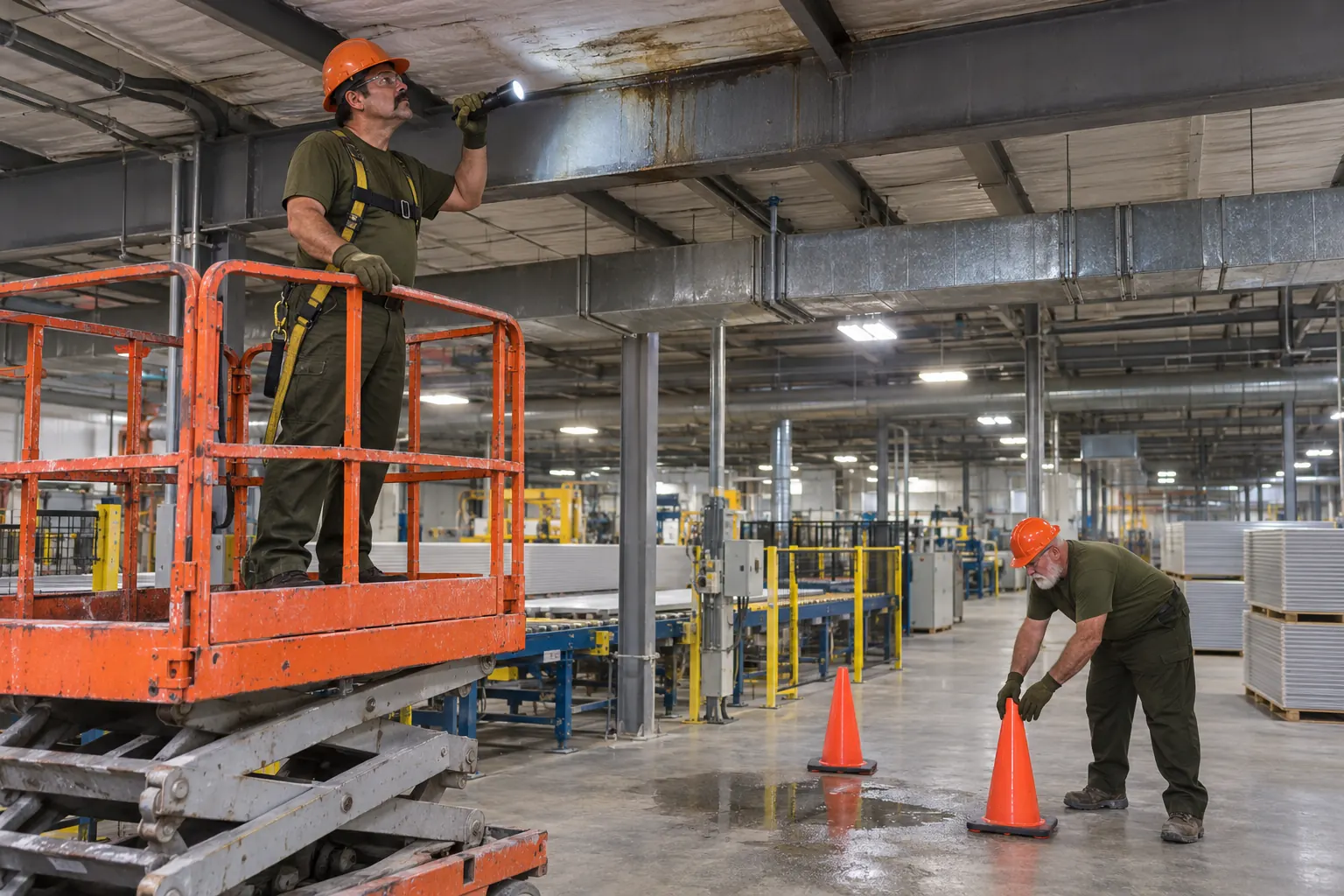
Common FixesTraced from the ceiling stain to the roof opening.
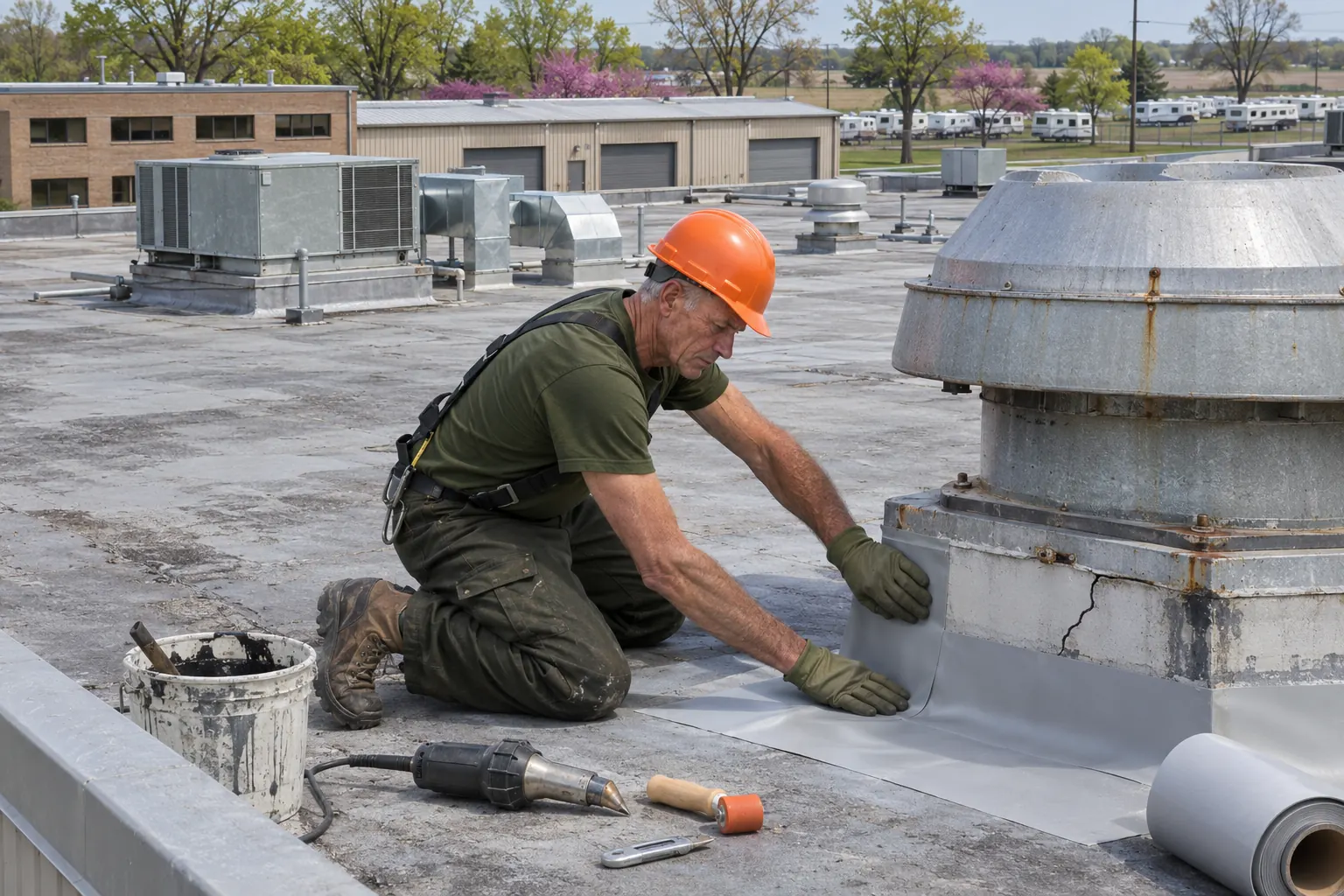
Common FixesCurbs, stacks, and drains on working plant roofs.
Common FixesShort answers to what owners ask about steel roofs before a repair.
Yes. On a factory roof the leaks almost always come from screws, laps, flashings, and the curbs around exhaust equipment. We replace failed fasteners, reseal laps, rebuild the curb flashing, and swap any panel rusted through, keeping debris away from the work floor below.
Steel panels last for decades, but washers, sealant, and trim wear out much sooner. Gauge, finish, cut-edge rust, and snow and ice at the eaves all shorten or extend that span. Keeping fasteners and flashings repaired is what lets the panels reach their full service life.
Rusted, bent, or loose flashing at walls, curbs, ridges, and eaves comes off and new matching metal goes on with sealed fasteners. Laps get butyl tape. Where flashing meets block or brick, counterflashing is set into the wall so water runs over it.
Dents and cracked sealant get documented with photos first, which insurers usually ask for. Then damaged fasteners and trim are replaced, laps resealed, and punctured panels swapped. Broken skylight panels and vents are replaced too. Dents that leave the metal intact are noted on the report.
Water that gets into a lap or a cracked washer freezes and expands overnight, then thaws and goes deeper the next day. Through a northern Indiana winter that widens small gaps, so spring repairs focus on laps, fasteners, and flashing first.
Send the building address and where the drips or rust streaks show up. We will walk the roof and price the repair.