Age
Open Coping Joints
- You See
- A stain along an exterior wall below a parapet.
- What It Means
- Water enters through coping seams or cracked masonry and runs behind the base flashing.

As an Elkhart commercial roof leak repair contractor, we trace water from the ceiling stain to the roof opening, then repair that opening with matching materials.
Elkhart commercial roof leak repair works when the water comes from a few openings. The columns show when the scope needs to grow.
Leaks show up inside, often feet away from the opening. These are the sources we trace most on Elkhart buildings.
Fixing the real opening ends the cycle of patching the same ceiling every few months.
Tracing the water from the stain to the roof means the patch goes where water enters, and the ceiling stops showing new rings after the next rain.
Insulation that soaked up the leak is cut out and replaced, which keeps it from rotting the deck or growing mold above the ceiling.
The written leak report names the cause and the repair, which helps landlords and tenants apply their lease terms without arguing about it.
Sealing coping joints, curbs, and drain flashing before winter closes the paths that snowmelt and ice dams use to get inside.
Call and tell us where the water is landing. Crews stop the water with a temporary patch first, then trace and repair the opening.
Call Us(574) 384-0858Tracing comes before patching, and each step answers one question.
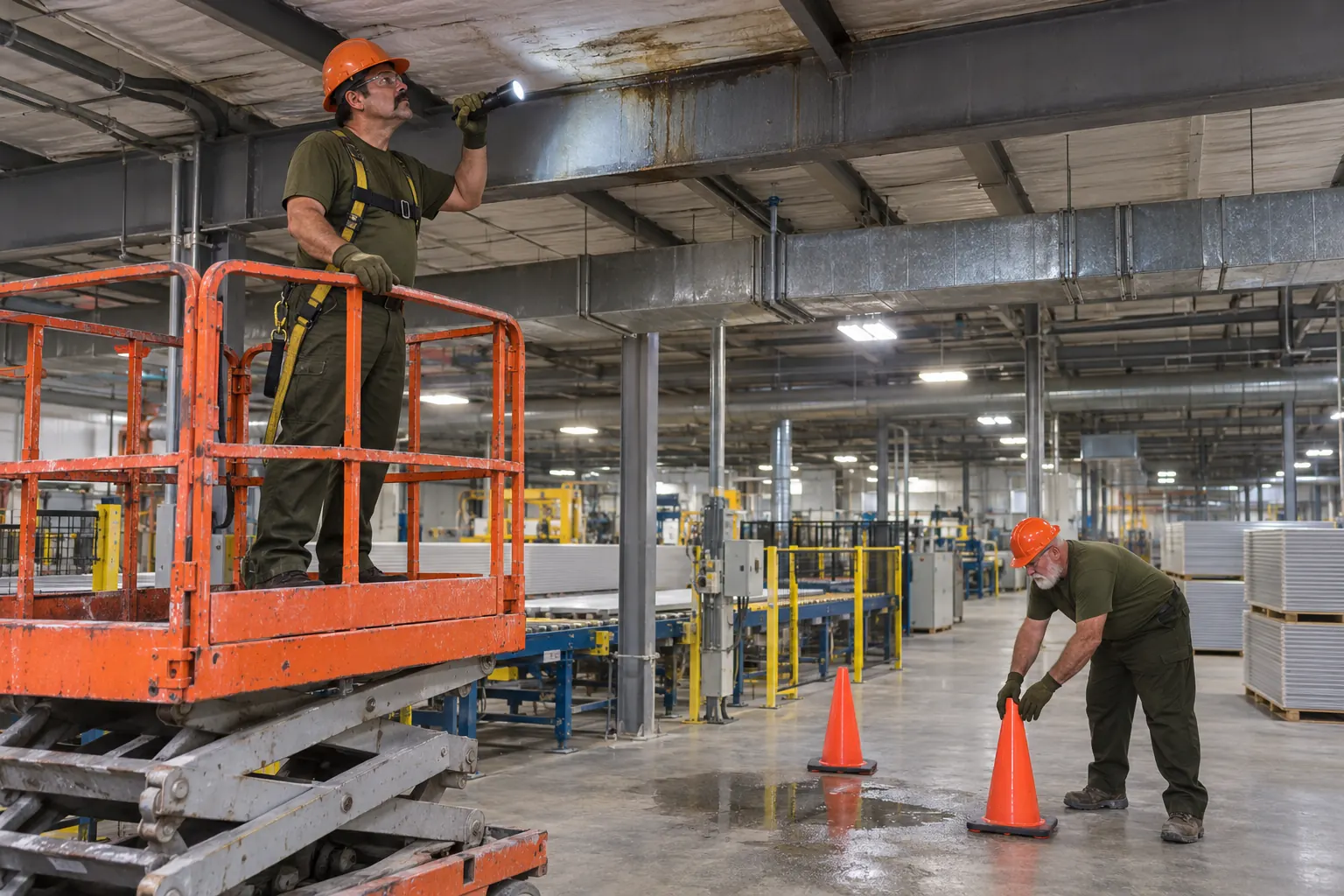
We start inside at the stain, mark the drip point, and check the deck above it. Then we go up and walk the roof from that spot outward.
Seams, coping joints, curbs, drains, and penetrations upslope of the stain get checked one at a time, since water runs along the deck before it drips.
Active leaks get a temporary patch the same visit when weather allows. The permanent repair follows once the roof is dry enough to bond.
Moisture readings show how far the leak spread under the membrane. Wet insulation in that area is cut out so the repair seals over dry material.
After the repair we water-test where we can and check the ceiling after the next rain. The leak report records the cause, the fix, and photos.
Once the source is found, the repair itself often belongs to one of these services.
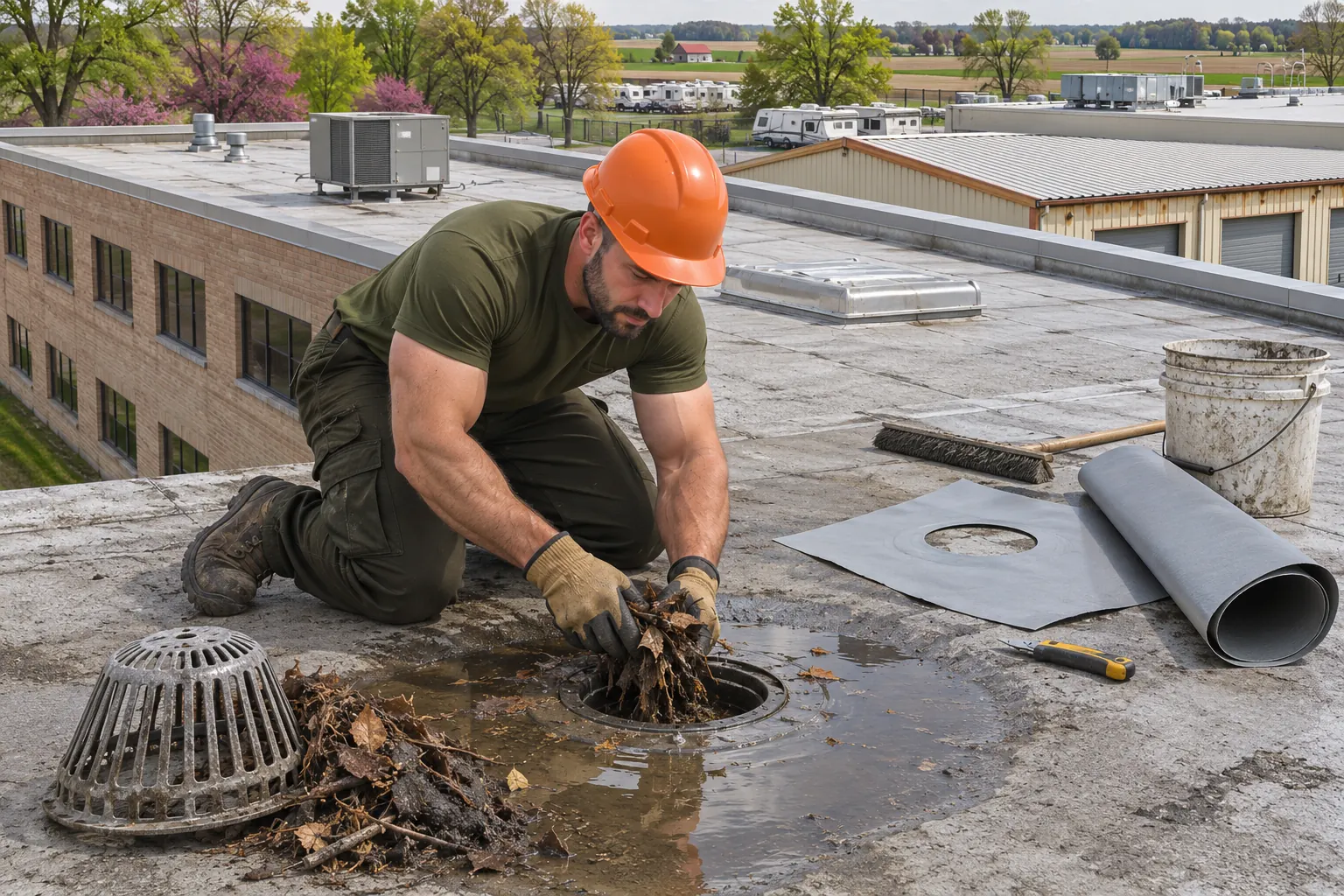
Seams, drains, and blisters on low-slope membrane roofs.
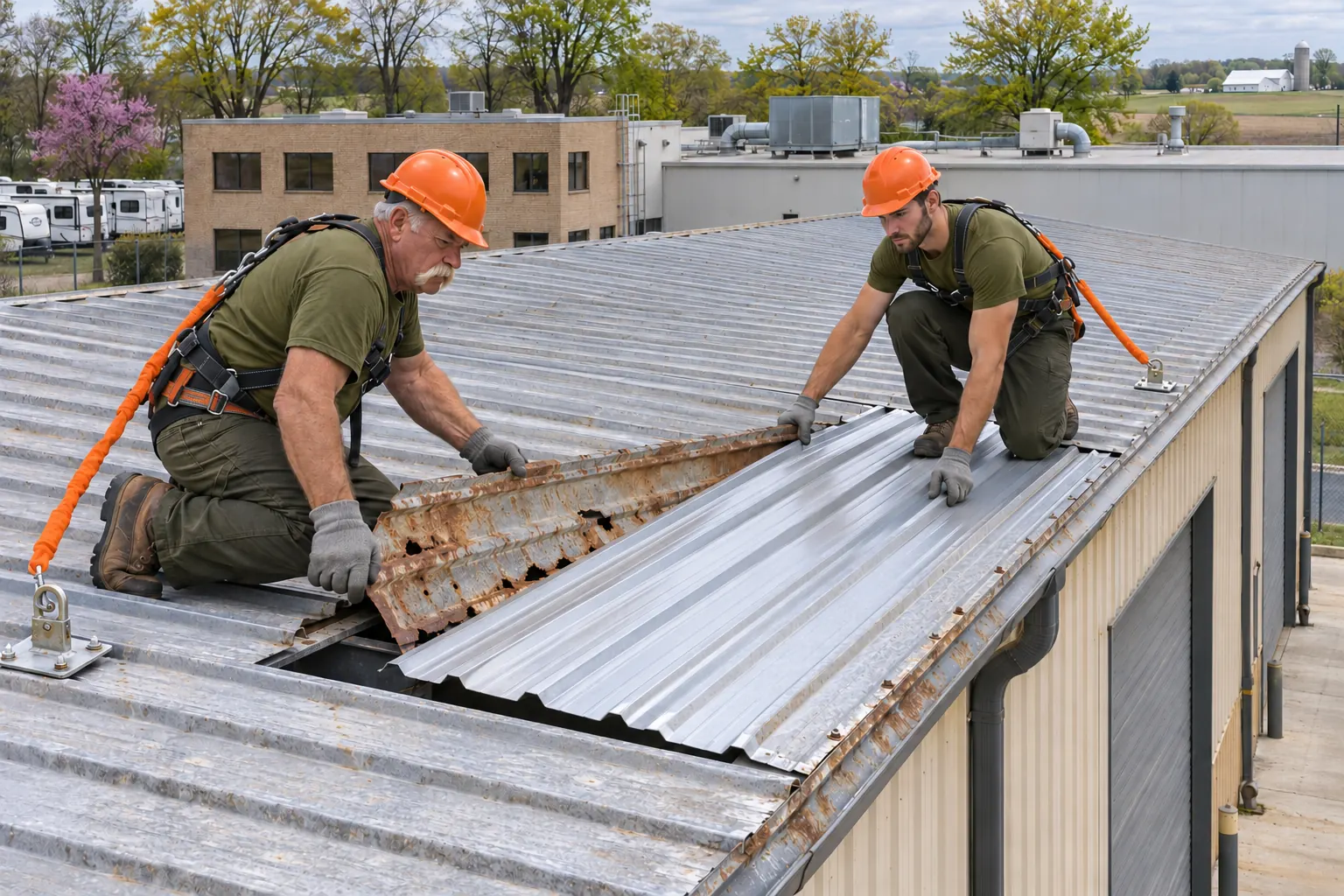
Common FixesLaps, trim, fasteners, and rusted panels on steel roofs.
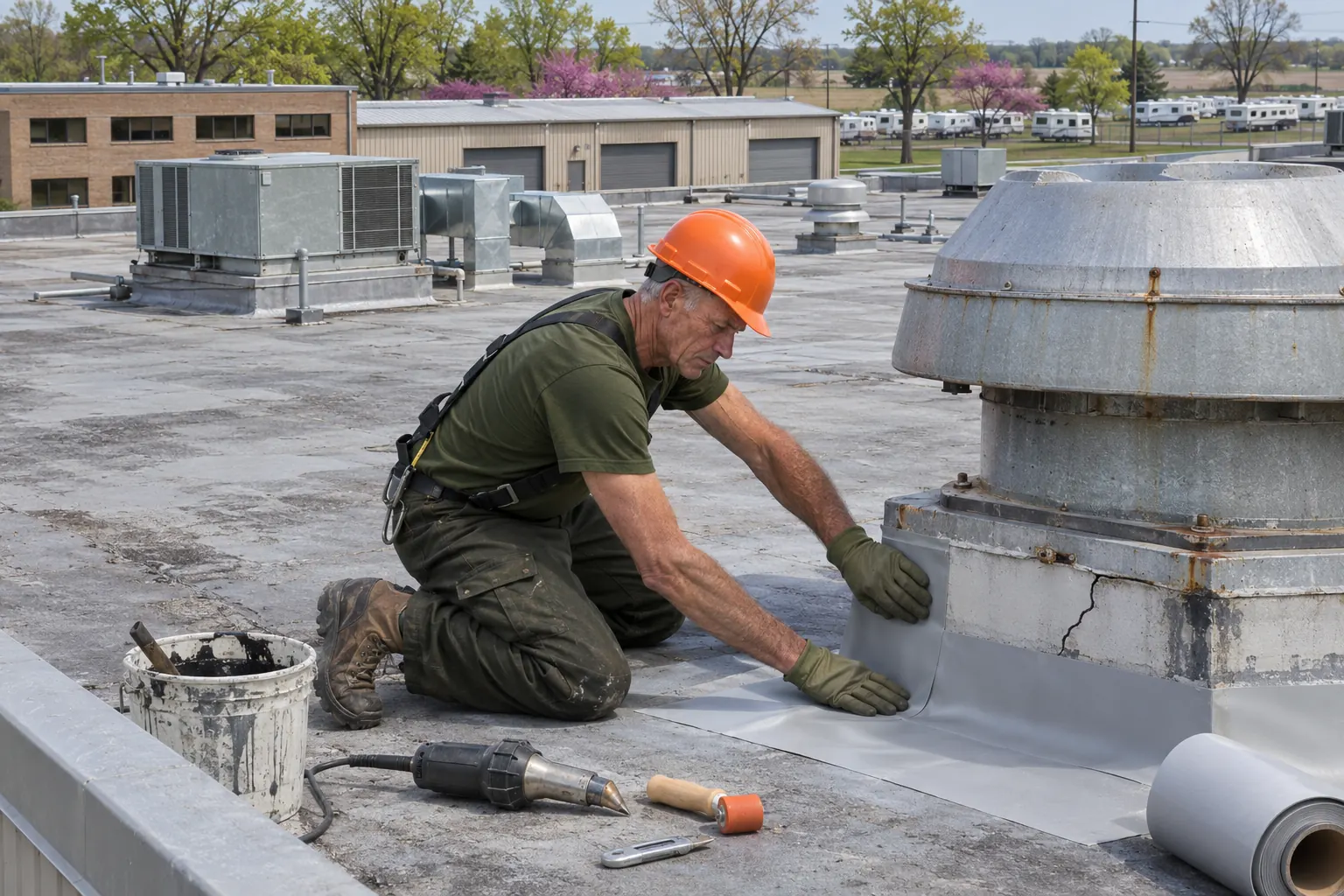
Common FixesCurbs, stacks, and drains on working plant roofs.
Common FixesPlain answers about leaks, leases, and winter water.
The lease decides it. Many commercial leases put the roof structure and replacement on the owner and routine upkeep on the tenant, and most ask tenants to report leaks quickly. Our leak report names the cause and the repair so both sides can apply their terms.
Snowmelt pools behind ice at drains, gutters, and scuppers, then rises above flashings and seeps through laps that rain never reaches. Lake-effect snow reaches Elkhart County, which means repeated melt cycles. We clear the drains and seal the openings the meltwater found.
We check the coping cap and its joints, the wall face, and the base flashing where roof meets wall. Most parapet leaks come through open coping seams or cracked masonry above the flashing, so repairs reseal or replace coping, rebuild base flashing, and seal wall cracks.
Heat from inside melts snow on the roof, and the water refreezes at colder eaves, gutters, or drains. Water then backs up behind the ice and runs under laps and flashing. Repairs seal those details; better insulation or drain heat cuts down on repeat dams.
A rooftop unit curb has many joints: the curb flashing, the unit base, condensate lines, and service panels. Vibration and service traffic open them over time. We check flashing height, seal the joints, replace failed flashing, and add walkway pads on the service path.
Tell us where the water lands inside and when it shows up. We will trace it to the roof and price the repair.