Age
Torn Tie-In Flashing
- You See
- A stain along the wall where the addition starts.
- What It Means
- The two roofs moved apart; the flashing bridging them split.

As a Goshen commercial roof repair contractor, we repair flat and metal roofs on plants, warehouses, offices, and shops, starting with where the water enters.
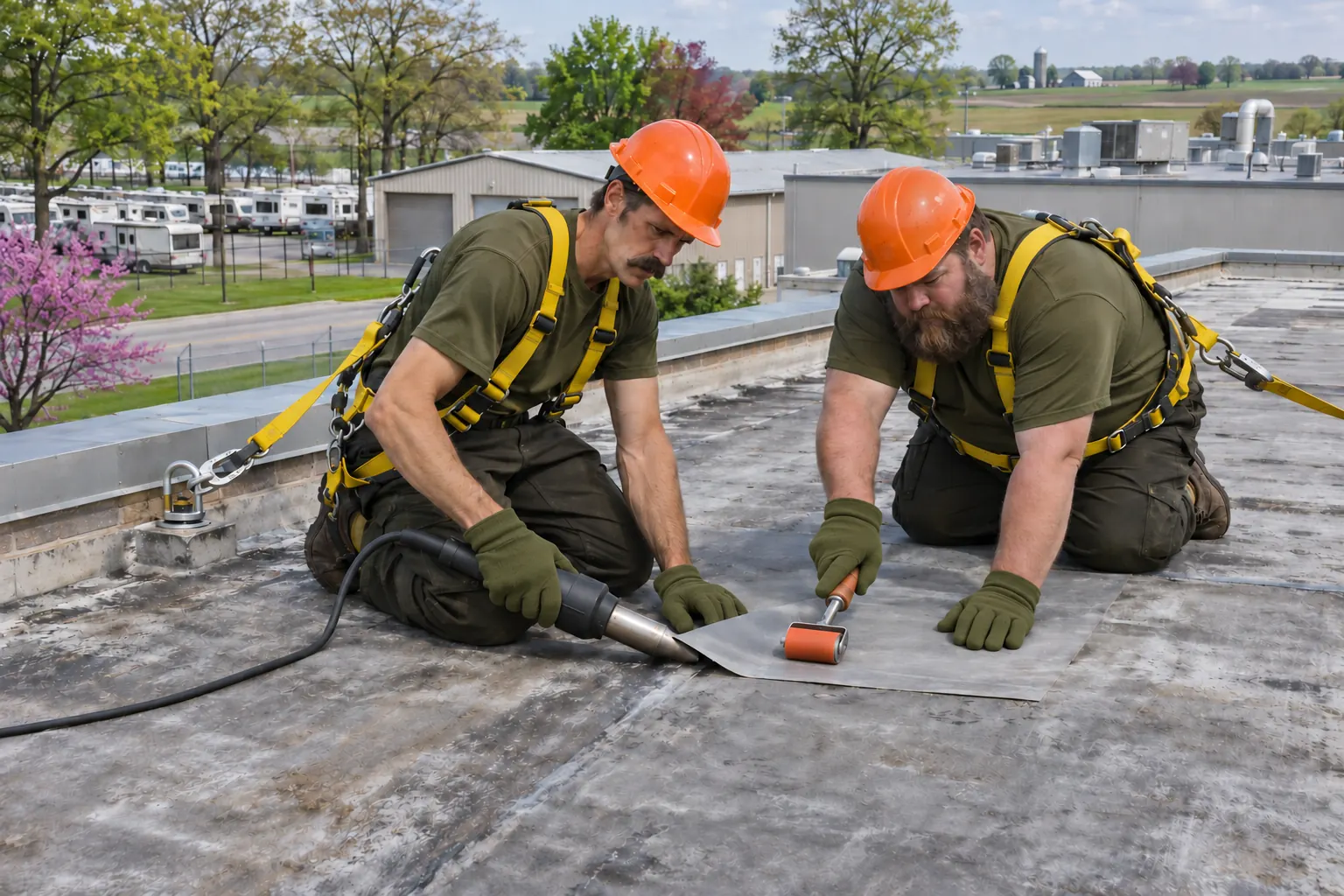
Goshen commercial roof repair calls often trace back to the seam between an original roof and a newer wing built later.
Two roofs from different decades rarely move the same way. The older section might be built-up with gravel while the addition carries TPO, or a steel shop roof might butt against a flat office roof. The joint between them takes the most stress, and that is where flashing tears first.
We rebuild that tie-in with material that bonds to both sides, then check each roof on its own terms.
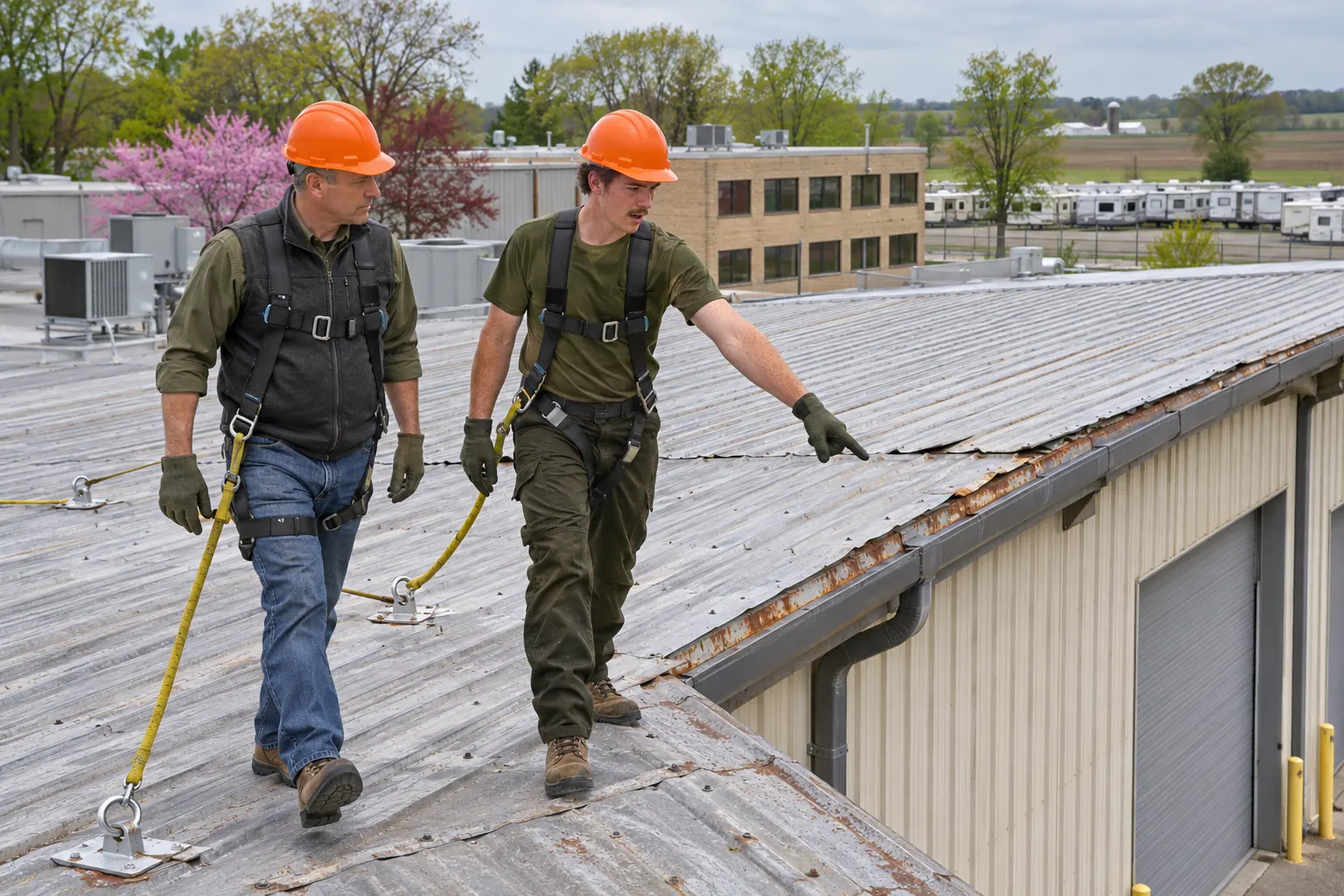
These show up most on Goshen buildings that grew in stages.
Fixing the tie-in usually stops leaks that owners have chased for years.
The older section and the addition keep their own membranes; only the joint and any wet board near it get replaced.
A rebuilt tie-in stops the water that ran down the wall between the two buildings and showed up as a long stain inside.
Clearing and re-flashing shared drains lets them carry water from two roofs before it backs up into laps.
The report notes how much life the older section has left, so you can budget for it apart from the addition.
On a building with several roof sections, each section gets its own answer.
Call and describe where the old building meets the new one. That joint is often the whole leak.
Call Us(574) 384-0858With two or more roof sections, the order of decisions matters.
Each section gets walked separately, then the joints between them. Inside, we check the wall line under the tie-in for stains and soft board.
Water can cross from one roof to the other before it drips. Readings on both sides of the joint show where it entered.
The tie-in flashing must stick to the older material and the newer one. We pick a detail that bonds to both and moves with the joint.
The joint gets fixed now. If the older section is near the end of its life, the report says how long it has.
The finished joint gets probed and photographed, and the wall line inside is checked after the next heavy rain.
Is your building near Goshen? We repair commercial roofs across the towns below, and for anywhere else, call us or send us a message.
What Goshen owners ask most before we come out.
Yes, flat, metal, and industrial roofs on all of them, retail included. Every repair begins by tracing the leak and checking the insulation for water, so the fix goes on the opening that caused the stain.
The number of roof sections involved, the size of any wet area, the materials on each side of a joint, and roof access set the price. Tie-in repairs take more detail work than an open field patch. The estimate follows a free inspection.
Yes. A single leaking joint, a clogged drain, or a few loose coping caps are all jobs we take. Small repairs on Goshen buildings get the same inspection and photo report as large ones.
Gravel gets cleared from the repair area, wet plies and board are cut out, and new compatible plies go in and get surfaced to match. Where a built-up roof meets newer TPO, a transition detail joins the two.
Where a steel roof meets a wall, the counterflashing and the top of the wall panels get checked. Loose trim, cracked sealant, and missing closures there let wind-driven rain in, so they get replaced with the roof repair.
Send the address and describe where the stains show up. We will inspect every roof section and price the repair.