Equipment
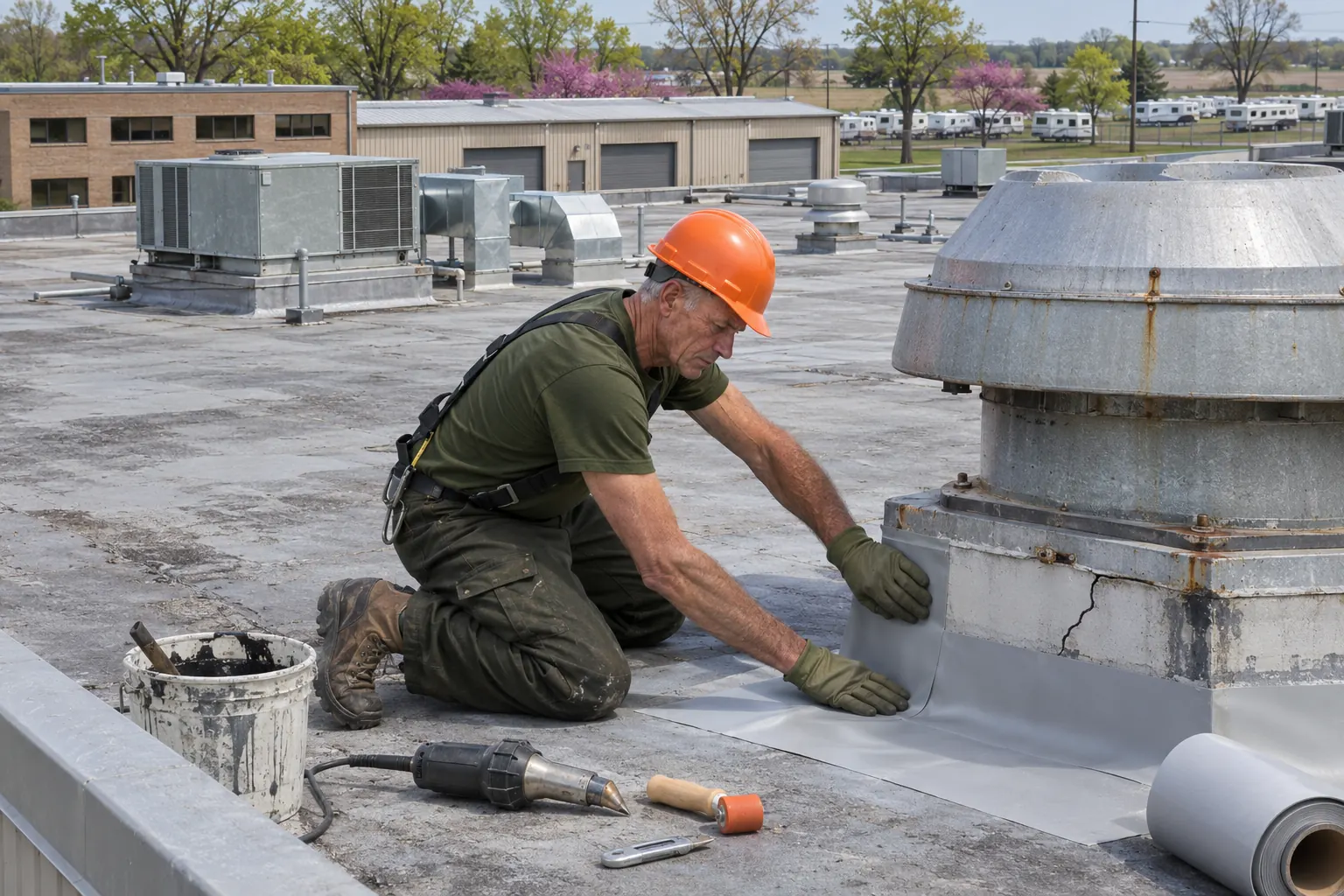
Cracked Stack Collars
- You See
- Rust and black streaks running from the base of an exhaust stack.
- What It Means
- Heat cycling cracked the collar seal; a new collar and membrane flashing go on.

As an Elkhart industrial roof repair contractor, we repair curbs, stacks, drains, and membrane on plant roofs while the production floor keeps running.
Elkhart industrial roof repair suits plant roofs where damage clusters around equipment. The columns show when a bigger scope is the better call.
Plant roofs wear fastest where equipment sits and people walk. These are the conditions we find on them.
Repairing around equipment keeps the roof over the line watertight without stopping the line.
Debris stays on the roof, the floor under any deck work gets protected, and noisy or odor-producing tasks are scheduled around shifts.
Curbs and stacks get their flashing rebuilt to the right height, so the same unit stops leaking every season.
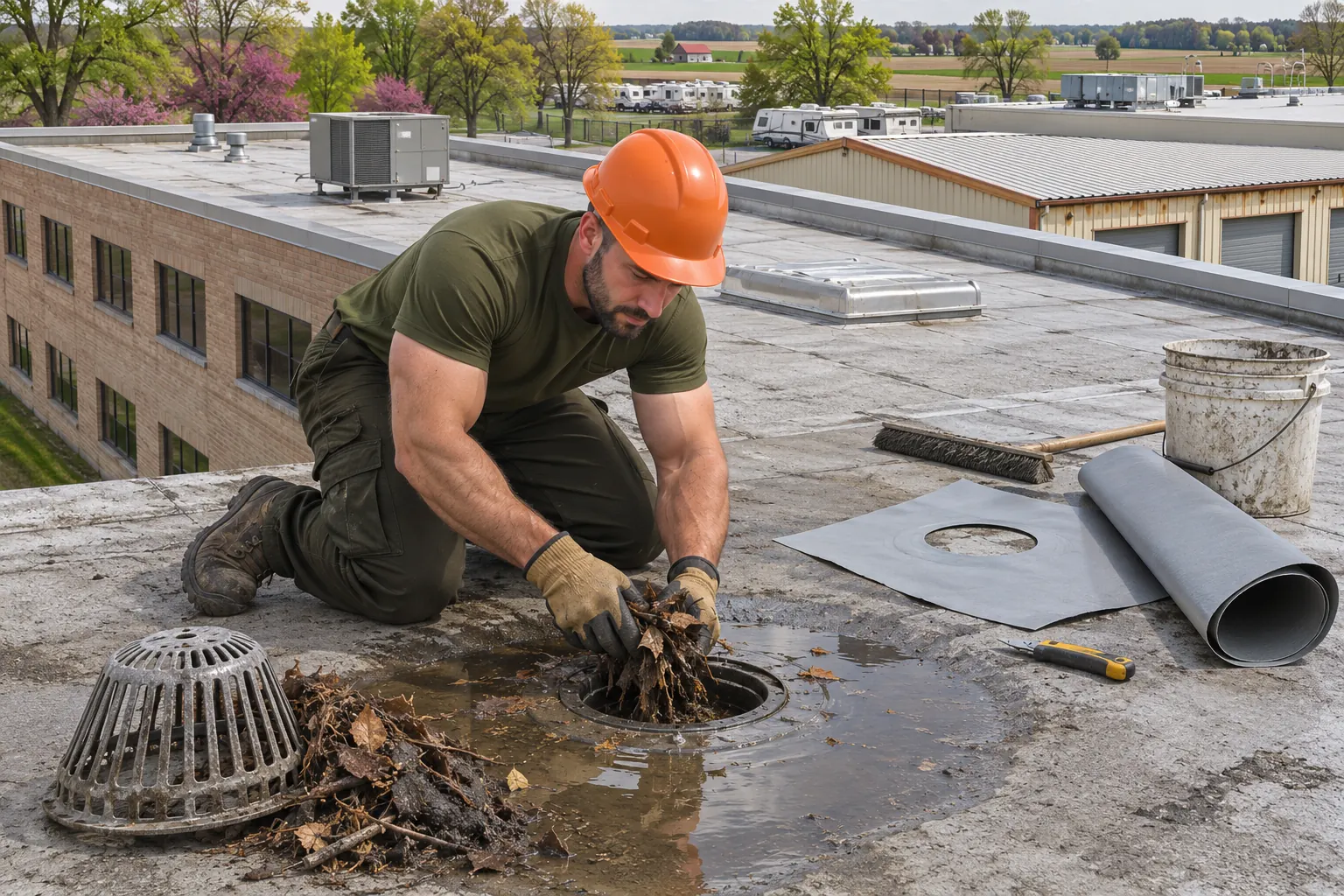
Replaced bowls, rings, and strainers move water off a large roof before it can freeze around the drain in winter.
Walkway pads on the paths to rooftop units take the wear from technicians instead of the membrane.
Call with the plant address and where the water lands. A temporary cover goes on first so the line can keep running.
Call Us(574) 384-0858Plant roofs get the same order every time, with safety rules set before work starts.
We walk the roof with your maintenance lead, check curbs, stacks, drains, and service paths, and note residue and heat damage near exhausts.
Access points, lockout needs, hot-work limits, and hours are agreed with the plant before any tool goes on the roof.
If damage clusters around equipment, repair wins. If a whole bay is wet, we price a section replacement next to the repair so you can compare.
Deck work, cutting, and anything with odor gets scheduled off-shift or between runs. Heat-welded and cold methods replace open flame near combustibles.
Repairs are photographed, drains are flow-tested, and the maintenance lead walks the finished work with us before we leave the roof.
Plants often have office wings with flat roofs, metal storage buildings, and leaks that show up far from equipment.
Seams, drains, and blisters on low-slope membrane roofs.
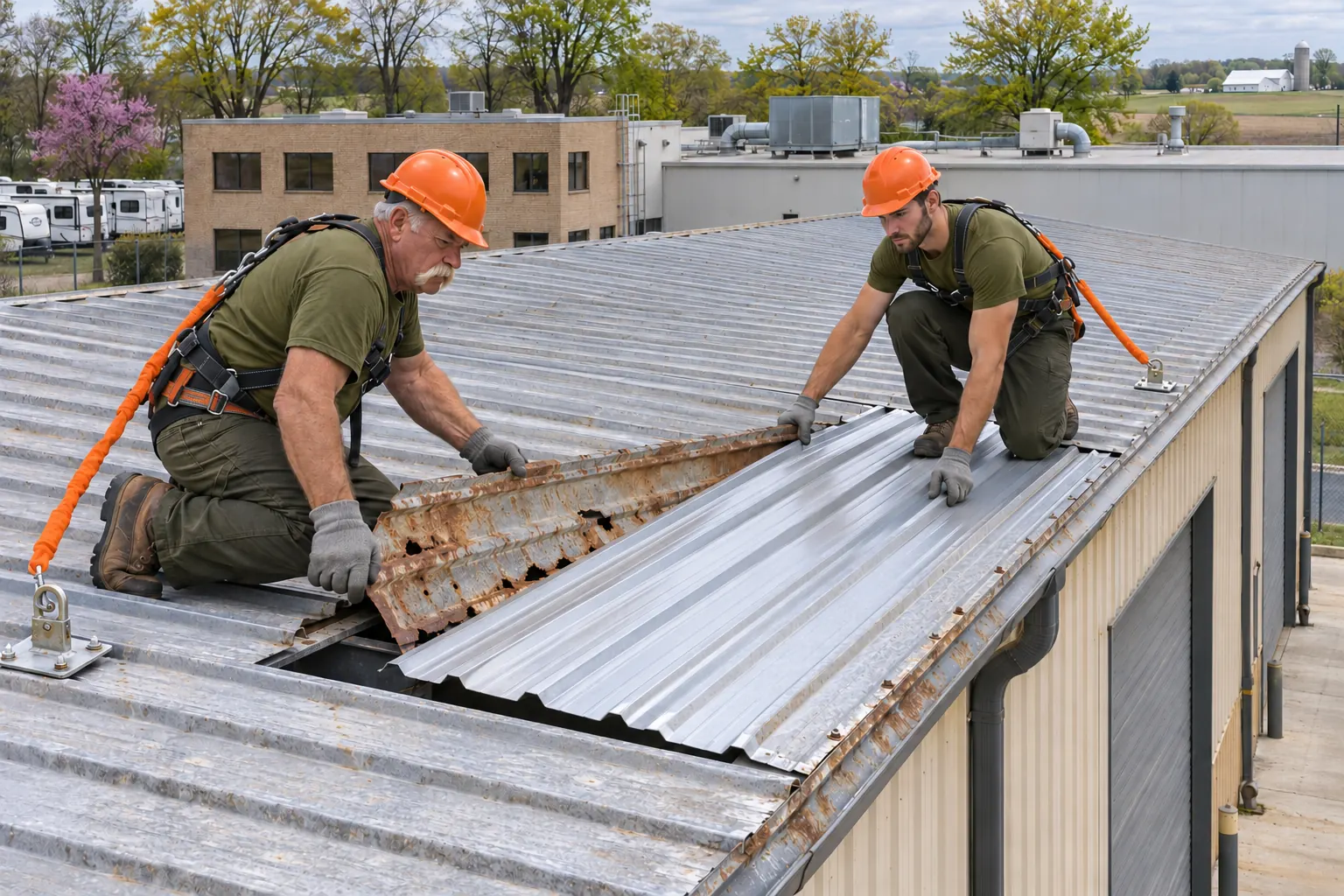
Common FixesLaps, trim, fasteners, and rusted panels on steel roofs.
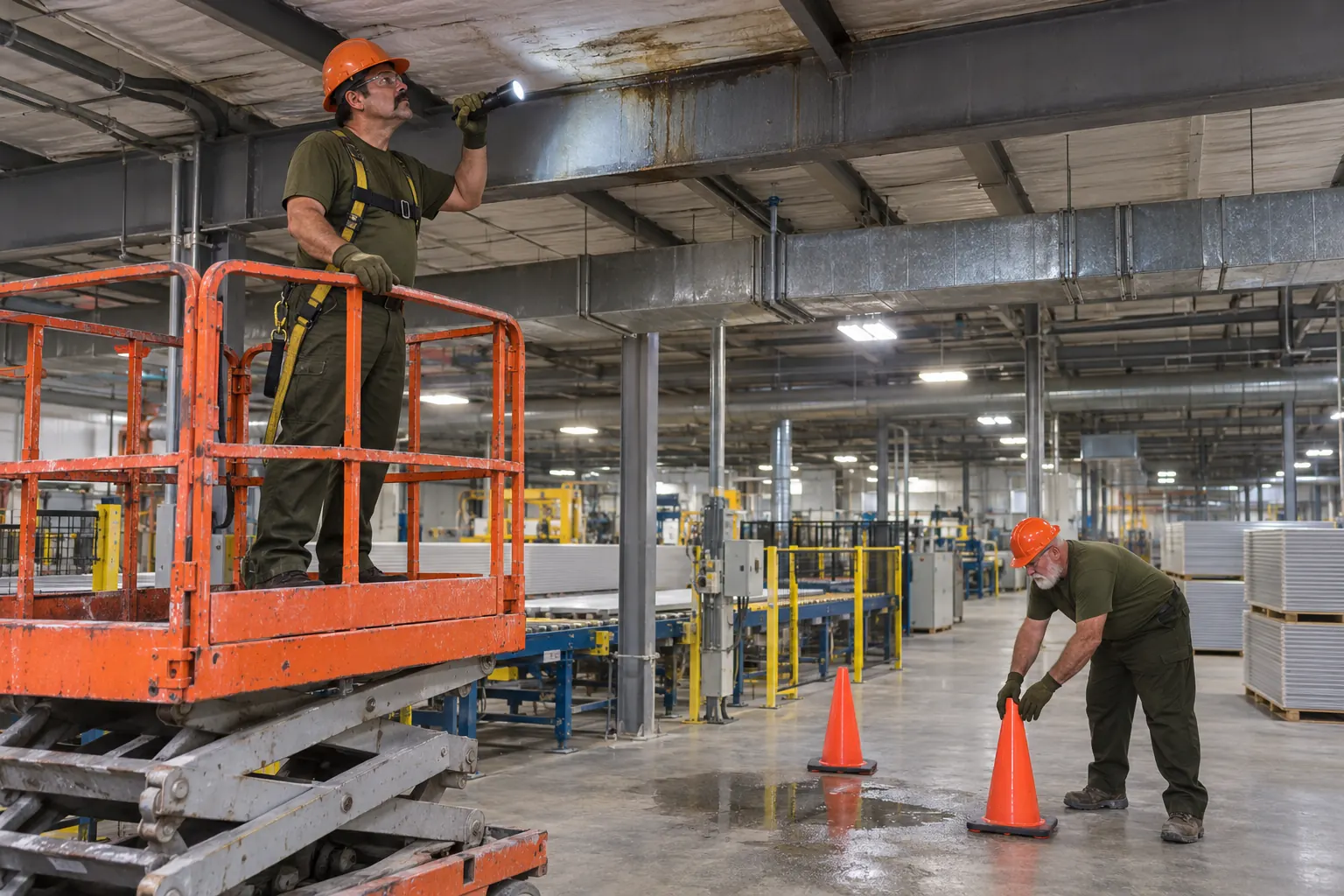
Common FixesTraced from the ceiling stain to the roof opening.
Common FixesWhat plant and facility managers ask before roof work starts.
Roof size, the number of stacks and curbs, residue that must be cleaned first, plant safety rules, and allowed work hours all move the price. Work over active production needs floor protection and sometimes off-shift crews. Lift or crane access adds cost. We price it after a free inspection.
Yes. Plants in Goshen, Warsaw, Kendallville, Columbia City, and Angola are in our service area, and plants close to those towns often are too. Call with the building location and roof type and we will confirm it.
Crews keep debris on the roof, protect the floor under any deck repair, and run noisy or odor-producing work around shifts. Torches are kept away from combustibles. Plant safety rules and access points are agreed before work begins.
Debris comes out of the drain first, then the bowl, clamping ring, and strainer get inspected along with the membrane flashing. Cracked bowls and broken rings are replaced and new flashing is set into the drain. Low spots that hold water nearby are corrected so ice stops forming there.
Most curb and flashing work can run with fans on, as long as crews stay out of the discharge path. Work right at a fan or stack base is scheduled with your maintenance lead for a shutdown window so the unit can be locked out.
Send the plant address, the roof type, and where water reaches the floor. We will set up an inspection around your shifts.